


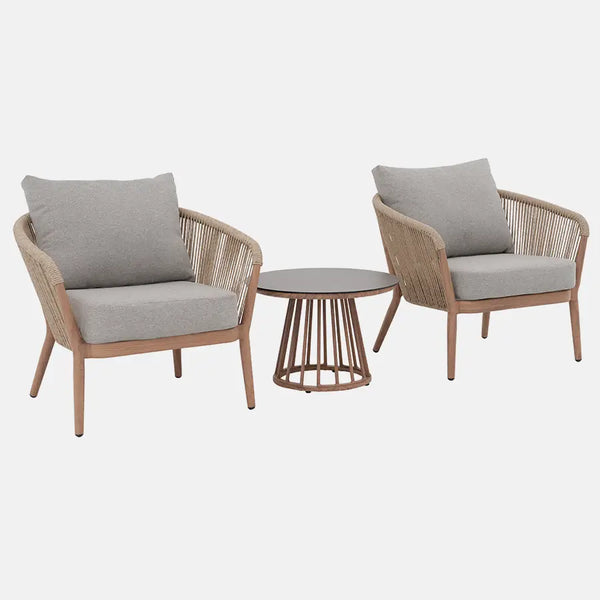


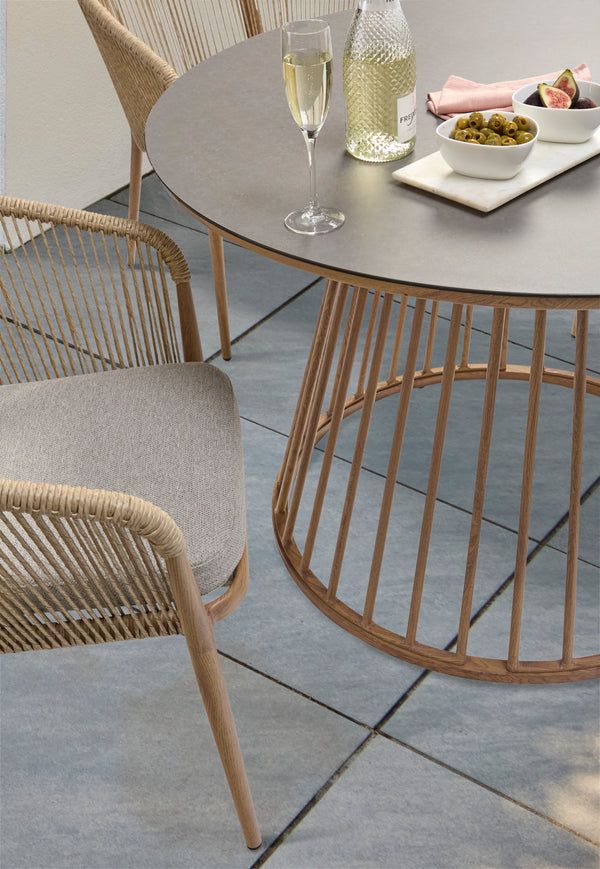

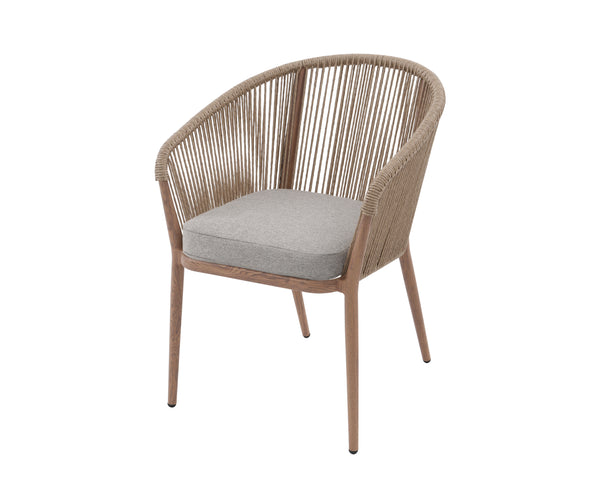
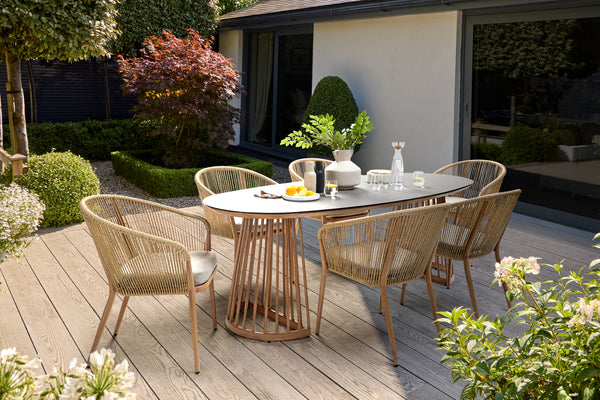
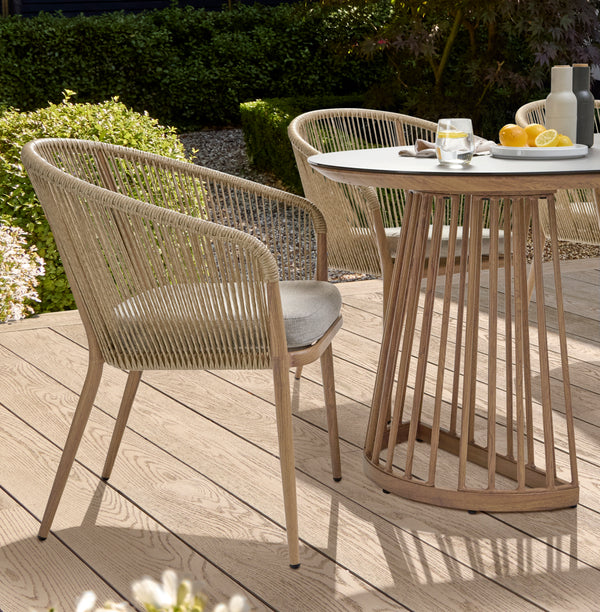


 Alfresco Entertaining Made Easier
8th April 2025
Welcoming guests into your garden isn’t just about enjoying the outdoors. It’s about creating a seamless extension of your home where comfort and style meet under the open sky. Creating the right space for this is a delicate balancing act that involves anticipating how people will feel and what they will desire.
In this guide to transforming your backyard into an inviting lounge area for alfresco entertaining, we will look at how different furniture and activities can conjure different atmospheres, and how you can change this with the simple change of a layout or addition of furniture. With our guide, you can transform your garden into the ultimate destination for enjoying the indoors, outdoors.
Must-Haves for Lounging
Imagine crafting a cosy corner in your garden where friends and family can gather in comfort and enjoy each other’s company without the constraints of walls. Our range of garden furniture includes pieces designed for both style and practicality. Most of our garden furniture features outdoor cushions packed with thick 8cm foam and double-piped to retain their shape, perfect for endless summer nights. When not in use, these cushions can be easily stored away to protect them from the elements.
Our lounge sets include a matching table with these comfortable seats, creating a relaxed atmosphere centred around conversation and leisure. In contrast, our dining sets feature a higher table for serving snacks and drinks, making it the heart of the party. If you’re undecided, our versatile high/low tables can adjust from a lounge to a dining height, offering the best of both worlds. Additionally, our corner sets can accommodate up to seven people on the sofa, with room for more when you add matching benches and stools.
Layout is key to alfresco entertaining, as you need to create the right conditions with comfort and convenience. One popular layout is a lounge set flanked by a few side tables. This setup ensures guests have their drinks within easy reach and provides a dedicated space for essentials like bottles, openers, and cocktail ingredients. With a drinks table for a garden party, you ensure guests feel at ease, fostering a warm and welcoming atmosphere.
There is no one, single perfect layout for your outdoor lounge area, but a plethora of layouts and some will suit your needs and desires better than others. So try out different layouts, and soon your garden will become the perfect haven for getting together with friends and family, basking in the warm glow of the sun and flanked by blue skies and green grass.
Possibilities for Outdoor Cooking
If you are planning on having guests around for the evening, then, you’ll need to offer them food that will captivate their tastebuds. But if you’re preparing food indoors, you won’t be able to entertain or cater for your guests as readily. What you need in this instance is an outdoor kitchen setup, which allows you to cook and entertain simultaneously without ever having to leave the party and, thanks to Kettler, it does not have to break the bank.
Our range includes BBQs and pizza ovens from the Everdure line by Michelin Star chef Heston Blumenthal and Danish brand Cozze respectively, giving you an assurance of quality that goes beyond the typical grill. Not just for pizzas, our pizza ovens are also perfect for grilling steaks, fish, and vegetables, providing the added allure of an open flame chamber. For more casual fare, our Plancha grills are ideal for grilling meats, eggs, and fish.
As for what to eat the food off of, paper plates and cutlery are not going to cut it. Don’t save your fine tableware for inside dining only. The beauty of alfresco dining is being able to enjoy the same experience of indoor dining complimented by the scenic backdrop. Try mixing and matching your favourite pieces of tableware to create a colourful and eclectic dining arrangement.
Options for Outdoor Shelter
So, you’ve taken care of seating and the food, and your guests are suitably comfortable and winding down from a great time spent in your garden. However, as we all know, the British weather can be fickle and unpredictable, capable of drenching your guests and furniture in a sudden downpour or leaving them chilly as the temperature drops. Happily, numerous outdoor pergolas are available to ensure your guests remain comfortable, and a plethora of outdoor heating options to counteract the evening chill.
As we’ve learnt from our Danish friends at Cozze, Scandinavian countries embrace outdoor dining even in the coldest of months. This is close to what they call “hygge”, which is a particular unpinnable level of comfort that contrasts with the harshness of winter, making you feel like you’re protected in your own little world. For more information on achieving hygge, read our guide to creating the feeling in your outdoor space.
Rather than huddling together like penguins, consider our outdoor heating equipment which offers warmth, light and style all at once, making for the perfect centrepiece for your alfresco experience. Available in various sizes and styles, including wall-mounted and free-standing options, these heaters can be seamlessly integrated into your patio setup. For a chic touch, consider our pendant heaters in sleek stainless steel or wicker, perfect for hanging over the centre table. Each product is crafted from durable materials designed to withstand harsh weather, ensuring they continue to provide warmth and comfort year after year.
For a more natural warmth, our guide to entertaining with fire pit tables offers insights on how to incorporate an open flame into your alfresco experience, enriching those chilly evenings with both warmth and ambient light. Not even the unpredictable British weather can hold you back from giving you and your guests the finest, most comforting and memorable alfresco experience.
And when the sun is back out, our range of panalsol pergolas gives your outdoor space a cutting-edge structure that puts a roof over your head. No longer will you need to shield your eyes with your hand all day; now, you can modulate sunlight with the adjustable winders, and at night, the LED lights create an atmosphere of being under the starry night sky even on the cloudiest of nights.Create an Enriching Garden Space with KettlerAt Kettler, we strive to provide versatile and high-quality furniture that can be the catalyst for memories that will live on in family folklore and photo albums alike. Our commitment to quality has been the fire that lights us since the 1960s, and our team is dedicated to helping you choose the ideal garden furniture and accessories for you. Reach out to us with any questions, and let us help you make your outdoor space somewhere for those unforgettable moments.
Read full article
 Hosting for Summer Bank Holidays
9th April 2025
Hosting a garden party over the bank holiday weekend isn’t just about showing off your garden space – it’s about creating those joyful social moments that cement themselves in the memories of your guests. It’s about community, enjoyment, and the simple pleasures of life shared under the open sky.
With the summer bank holidays just around the corner in the UK, these extended weekends provide a fabulous opportunity to connect with loved ones. That extra day off makes for a special long weekend where we can truly get together and celebrate.
But what to do when you’re hosting a party? How can you ensure that you’ve got the right atmosphere to create a special bank holiday celebration? It’s time to hang the bunting and see how you prepare for a day in the garden that will live long in the memory of you, your friends and family.
How to Organise a Summer Garden Party
Before diving into the particulars, it’s crucial to know the backbone of any successful garden gathering:
Furniture – Ensure there are ample seats and tables for all your guests.
Entertainment – Conversation is great, but a bank holiday get-together can come alive with an activity to base it around.
Food – A variety of delicious and easy-to-handle foods will keep guests happy.
Drink – Keep a selection of refreshments available to suit all tastes – soft drinks, juices, beers, wines, and maybe a signature cocktail.
Heating – As the evening cools, ensure your guests remain comfortable.
Having the Right Garden Furniture
With the warm sunshine above and lush greenery around, could there be a more perfect setting for a summer bank holiday party with your nearest and dearest than your own back garden? Whether you are hosting a small, intimate gathering or a grand soirée, the right garden furniture is crucial to setting the tone.
At the heart of our collection lies a balance between durability and elegance. Our lounge sets, with their plush, double-piped cushions, are more than just seating – they’re a promise of relaxation and longevity. 8cm thick yet discreetly stowed when not in use, these cushions invite you and your guests to linger over conversations without a glance at the clock. But what about when the party picks up tempo?
Enter our innovative adjustable high/low tables. Designed to adapt from serene afternoon tea settings to lively evening dining, these tables offer unmatched versatility. Imagine how much easier your hosting duties become when your furniture conforms to the day’s needs, rather than the other way around.
Arranging your garden for maximum enjoyment requires a bit more than placing furniture haphazardly. Imagine creating zones: a cosy corner with a lounge set for intimate chats, a dynamic dining area with high tables for spirited toasts, and perhaps a tranquil spot under a grand parasol for those seeking a moment of shade.
And for those unexpected guests or larger gatherings, our sleek, matching benches and stools ensure no one is ever without a seat. Integrating these neatly with the same aesthetic as the rest of the set allows you to craft moments and memories in a space that feels inherently yours.
Consider what your guests might leave behind at home – not everyone remembers to bring sunglasses to a garden party, right? This is where our sweeping, contemporary parasols offer what you need. Offering not just UV50+ protection but also a substantial coverage area, our parasols are as much a statement piece as they are a practical addition to your garden. Whether wind-up, wall-mounted, or free-arm, these parasols ensure your guests are comfortably shielded from the midday sun.
Outdoor Games for Entertainment
What’s a summer party without some playful competition? Consider grabbing a badminton set for vertical fun, or perhaps a giant Jenga tower that will test the dexterity and strategy of your guests.
Table tennis could be the way forward, as this quick and space-efficient game always goes down a hit. Our table tennis tables are regulation size and are topped with a 4mm melamine resin plate top which ensures a ball bounce that even professionals will be happy with.
Make it a main event to keep guests entertained while the food is being made. You could even stage a tournament that decides the all-important question: who is the true champion of good old-fashioned ping pong?
Make Culinary Delights Outdoors
There’s nothing quite like the subtle joy of grilling a perfect steak or even a few homemade snacks without having to step away from the conversation.At Kettler, we stock the Everdure range of BBQs from multiple Michelin Star-winning chef Heston Blumenthal, and it comes in both gas and charcoal varieties. It features a Fast Flame Ignition System which gets your charcoal ready in just 10 minutes and includes a built-in rotisserie system for an authentic, high-quality rotisserie experience right in your garden, while the gas BBQs have multiple individually-controlled burners which allow you to set up many foods on the go at once.
For those smaller bites, a Cozze Plancha grill could be a game-changer. Quick to heat up, easy to manage, and perfect for searing everything from meat to veggies – it keeps the cooking casual but the flavours intense.
Keeping Spirits High with Beverages
Ensure your beverage game is as strong as your food menu. Stock up on a selection of beers, wines, and handcrafted cocktails. Thoughtfully placed side tables can keep drinks within easy reach without cluttering the main lounge area, maintaining a neat and inviting space. Too many drinks could lead to an accident, which isn’t ideal when you’re likely wanting to use the good glasses!
Our side tables compliment the height and width of our lounge sets to exact measurements so that they fit neatly into your setup without any gaps or loose ends, and are made from the same high-quality materials as the rest of the range with touches of finesse such as the glass top and adjustable footcaps in case you’re placing it on uneven ground
Provide Warmth to Extend the Festivities
Let’s face it, with Britain’s temperamental climate, a garden party could be moved indoors if you have not got the right facilities to keep your guests warm. However, envisage a setting where elegant garden heaters and a well-placed canopy shield you and your guests from a sudden chill or unexpected drizzle. It’s all about creating that snug, ‘hygge’-infused environment right in your own backyard.
How can this be achieved? With our diverse range of outdoor heating options that offer not just warmth, but also light and a stylish flair. Picture a sleek, stainless steel pendant heater, suspended gracefully above your centre table, or perhaps a free-standing heater, blending seamlessly into your garden decor. These aren’t just functional but are designed to be integral elements of your outdoor get-togethers.
Moreover, if you’re drawn to a more natural source of heat, why not consider integrating a fire pit table into your garden landscape? Our guide to entertaining with these charming additions offers invaluable insights into making the most of their warm glow and inviting flicker, perfect for those chillier evenings. Imagine not having to worry about the night’s darkness or a drop in temperature as you spend treasured time in a space where everyone is having a special time and bonding with each other.
Create Wonderous Garden Memories with Kettler
At Kettler, we pride ourselves on crafting products that enhance your outdoor living experience, making every garden party an event to remember. Since the 1960s, our commitment to quality and functionality has helped our customers create beautiful, durable outdoor spaces. Whether you need advice on selecting the perfect BBQ or garden furniture, our team is here to assist you in making your outdoor gatherings spectacular. Contact us if you have any queries, and we can help make your garden a stage for the best of times.
Read full article
 Top Grilling & Barbecue Tips
24th April 2025
There’s nothing quite like the feeling a BBQ gives you, where the aroma of grilled food fills the air, and the sound of sizzling meats ignites your appetite. However, lurking behind the anticipation of that first bite is the jeopardy of the unknown: Will your culinary creations char to a crisp or achieve that perfect, succulent finish? Happily, there are ways to ensure a great BBQ meal for friends and family, and by choosing to read this blog, you’re already a grill master in the making.
Read on to find out whether to choose between gas and charcoal, how to master the art of flavour and more charcoal and gas BBQ tips for beginners and experts alike.
Should You Use Gas or Charcoal BBQ?
When it comes to BBQ, the debate between gas and charcoal is as old as time. Each has its merits and its loyal followers.
Gas BBQs are the go-to for convenience and time. With individual control knobs for temperature regulation across the burners, creating different grilling zones becomes a breeze. Perfect for those who value precision and ease. Also, there is no waiting around for the charcoal to heat up, perfect for impromptu BBQs.
Charcoal BBQs, on the other hand, offer an authentic grilling experience with an unbeatable smoky taste. Our BBQs from Everdure feature automated touch controls that provide an electric ignition so the charcoal can start burning with the push of a button, as well as an electrically adjustable rotisserie, they bring tradition to your outdoor space.
Tips for Charcoal BBQs
Be mindful of the inherent nature of charcoal fires. The key to charcoal barbecuing is airflow. It is the lifeblood of your charcoal BBQ; the more air that flows in, the hotter your fire. Your grill dampers are critical for regulating its internal temperature. If you find your coals burning too quickly, adjust by partially closing the top vent. Conversely, ensure the bottom vent remains open during grilling to keep the fire alive. The airflow you have will depend on the type of food that you are cooking, so be sure to use your own culinary instincts.
For more tips and guides on the Everdure Charcoal BBQs, consult the official user guide.Additionally, there are many accessories that can enhance your experience. Make the dispersing of coal stylish and more convenient with our accompanying Everdure coal scuttle, and to manage different cooking timings, use our accompanying warming rack which sits on the grill of your Everdure charcoal BBQ and keeps food warm without overcooking it.
Tips for Gas BBQs
Many of the tips in the Charcoal BBQ tips section above apply to gas BBQs as well. Having three separate burner areas in your Kettler gas BBQ allows you to fine-tune and cook multiple types of food at once, but it’s important not to overcrowd the grill so that each food item has room to breathe and cook evenly. This ensures that everything from your delicate fish fillets to robust vegetables receives the perfect amount of heat. Plus, doing this improves heat circulation, which is crucial for achieving those coveted grill marks and a uniformly cooked interior.
For further tips on cooking with the Everdure Gas BBQ, consult the Everdure YouTube channel and these videos.
How to Get the Perfect BBQ Taste
The signature smoky taste of BBQ is what we all aspire to make, but achieving this involves patience. Resist the temptation to flip over your food so often and just flip it once from one side to the other. With enough patience, your meat and fish will surrender to the grill and brown, or caramelise, as some call it.
Using marinades is a simple, versatile way to add bursts of flavour to meat, fish and vegetables. Prepare meat, fish and vegetables in marinade and store it in the fridge in the morning, and by the afternoon when the sun is shining, the flavours will have seeped and developed into every morsel of the food (be sure to leave it out for 20 minutes to lose the fridge’s chill). Season once cooked, and you’ve got that seared BBQ taste with a depth of flavour.
Understanding Direct Vs Indirect Heat
Mastering direct and indirect heating methods can significantly impact your grilling outcomes. Direct heat is perfect for smaller, tender pieces, while indirect heat suits larger cuts needing cooking times of 20 minutes or more.
When using direct heat, fat can drip onto the coals or burner and ignite it, causing flare-ups that can char your food. To combat this, keep the grill lid down as much as possible to limit oxygen and create a more oven-like environment for even cooking. Should you encounter flare-ups, don’t panic. Temporarily moving the food to an area of indirect heat can save your meal from burning.
To create indirect heat on a charcoal grill, arrange the coals to one side, creating a hot zone for direct heat and a cooler zone for indirect cooking. For gas grills, achieve this by turning on one set of burners to high and leaving the area under the food unlit.
Keeping Your BBQ Clean
Maintaining the cleanliness of your BBQ not only keeps your cooking hygienic but also makes sure your BBQ is as good as new, summer after summer.
Make it a routine to clean your BBQ after every use. This prevents the buildup of grease and food residues that can affect your grill’s performance and the taste of your food. Our multi-purpose cleaning brush is designed to reach the hardest spots and remove grime without damaging your grill, and our brush and pan set is perfect for collecting ash from charcoal BBQs, ensuring a clean base for your next grilling session.It’s not just the inside but the outside of your BBQ, too. When not in use, covering your BBQ can protect it from the elements and reduce the amount of cleaning required. Kettler’s BBQ range includes tailormade covers that fit their models perfectly, offering protection against rain, dust, and sunlight. You can find these products and more in our BBQ accessories section.
Light Up Your BBQ Setup With Kettler
If you’re looking to upgrade your BBQ to make this summer one to cherish, our dedicated team is here to assist you in selecting the ideal BBQ setup from Kettler. We provide expert advice and support throughout your decision-making process. Explore our BBQ range, or get in touch with us for any queries.
Read full article
 Wicker vs. Rattan: The Complete Guide
29th January 2026
Rattan and wicker furniture have been a major part of home and garden decor for over 50 years. It has been the basis for iconic pieces of furniture, such as the Peacock chair which has been in iconic photographs of famous faces from John F Kennedy and Katharine Hepburn to Diana Ross. Yet, despite its prominence, the nuances between rattan and wicker are not widely understood.
Wicker and rattan are terms frequently used interchangeably in the furniture world, yet they denote vastly different concepts. As we will explore further, rattan and wicker are a combination of material and technique that has resulted in a wide array of furniture that not only adapts to both indoor and outdoor settings but lasts for seasons to come.
As we delve into the realm of wicker vs rattan, we look at the differences and similarities between wicker and rattan, and uncover the rich history of wicker weaving, from its ancient Egyptian origins to its resurgence in the mid-20th century. If you wish to find out about how to care for our rattan garden furniture or simply searching for ideas on how to use it in your home and garden, this is the blog for you. Discover more in our synthetic rattan furniture range, which offers the best qualities of the material in the form of sofas, tables, sunloungers, benches and more.
What is the Difference Between Wicker and Rattan?
In short, rattan is a natural material, while wicker is the technique used to weave that material into furniture.
When discussing furniture, “wicker” and “rattan” are often used interchangeably, when in actuality they refer to different aspects of the furniture. Wicker is a weaving technique that creates a lattice-like pattern, whereas rattan is a group of palm plant species from which we obtain material to create furniture. Rattan is often wickered to make furniture and baskets, but there are other wicker items made from materials other than rattan, including bamboo, reed and willow.
What is Rattan?
Rattan is a naturally renewable palm native to tropical regions of Africa, Asia and Australasia. Strong and flexible, yet lightweight, it’s a prized material used for a wide variety of furniture both indoors and out.
What is Wicker?
Conversely, wicker refers to the weaving method used to construct furniture. This technique involves interlacing material over a sturdy frame to form textured, breathable pieces that are resistant to wear and tear. The technique is suited best for pliable materials, it is implemented with natural fibres such as rattan, bamboo and reed.
The History of Wicker Furniture
The first people that have been discovered to create wicker furniture were the ancient Egyptians, who made it from naturally growing grass and cane and stored pieces in tombs. Then, it was passed through the hands of history, from the Roman Empire to Colonial America. Even back then, wicker furniture was recommended by design experts for homeowners who wanted to bring summer into their homes or have seating that let the wind through its lattice for a cooling effect.
It wasn’t until the 1960s and 70s when wicker-woven furniture made a huge revival, sparked by visionaries such as Paul Frankl and Gabriella Crespi who reacted to the florid designs of Victorian furniture by blending ornate touches with natural and affordable materials. This helped to define the look of the modern home and helped rattan to remain an influential presence in the interior design world since. In the mid-2000s, synthetic wicker became popular as an alternative for its ability to open up more colour and texture options.
Natural vs. All-Weather Rattan
Traditional rattan made from natural plant materials was often seen as a strictly interior piece of furniture, but once synthetic rattan came to the fore, it allowed designers and homeowners to bring furniture into the garden area for the first time. The beauty of having rattan furniture outside is its versatility – whether you want a modern feel or a rustic look.
Synthetic rattan, used in Kettler furniture, is made to be weatherproof. Where previously furniture did not stand a chance against rain, snow, sunlight and fading, synthetic rattan gives you the all-natural appearance that drew Frankl and Crespi to the material, but bolstered by UV-resistant materials that will defend against the elements. You can further protect your rattan garden furniture with a tailormade Kettler protective cover.
Garden and Home Ideas to Try with Rattan Furniture
With rattan furniture, you have access to a plethora of ideas to decorate and build on your home or garden area. If you have a large family and enjoy eating outdoors, consider a cohesive dining set that brings together your garden patio design with a refined and relaxing centrepiece. Alternatively, if you wish to use the garden as a space to unwind and enjoy company, Kettler’s synthetic rattan lounge and corner sofa sets are a blend of comfort and stability, with double-piped cushions that are stuffed with a body-loosening 8cm foam core. Or, have the best of both worlds – at Kettler, we have height-adjustable rattan tables that can transform from dining sets to lounge sets, so you can convert in a matter of seconds to whatever setting you desire.
Wicker-woven furniture can take many forms and do many jobs. If you want to create a relaxed feel, garden benches and 3-seater sofas make an excellent alternative to chairs, and if you need extra seating in certain circumstances, a stool can be used for guest seating or a footstool to put your feet up. The lightweight nature of rattan makes it easy to rearrange the layout however you wish to have it on any given day.
For inside the home, rattan has qualities that make it suitable for conservatory furniture. Conservatory table and chair sets react well to the changing temperatures of the conservatory, ensuring that the furniture remains durable and comfortable without warping or deteriorating over time.
The best ideas come from pairing pieces of furniture together to add to your experience. Try a sumptuous rattan sunlounger with a side table so you can make the most of every blade of green grass while the sun is out, or pair a rattan fire pit table with matching gas bottle storage so you can enjoy your garden even when the sun goes down.
How to Care for Rattan Furniture
Synthetic rattan furniture is known for its durability and weatherproof qualities, but applying proper care ensures its longevity and maintains its appearance, making it a lasting addition to your home or garden. Here’s how you can keep your rattan furnishings in pristine condition:
Cleaning: Use warm soapy water to clean the furniture. For a more comprehensive care approach, consider the complete wicker & rattan care set available on the Kettler website.
Dusting: Regularly remove dust using a clean, soft brush. For surface cleaning, a clean damp cloth is effective.
Protection: Use pads, mats, and coasters under plates, glasses and cups to guard against scratches, spills, stains and heat damage. In the event of spills, wipe them away immediately to prevent staining.
Immediate Action: Tree sap and bird droppings can be particularly damaging if left untreated. Clean these off as soon as possible.
Covers: While synthetic wicker is robust, protective covers are recommended for most items to shield them when not in use.
To complement your rattan garden furniture, Kettler offers weatherproof cushions designed for outdoor use. Here’s how to care for them:
Storage: Cover cushions when not in use immediately after use. If exposed to rain, they can dry within 20 minutes to 2 hours, depending on conditions.
Winter Storage: Store in a dry, ambient temperature during the winter months to preserve their condition.
Cleaning: Sponge clean only. Kettler cushions are not suitable for dry cleaning or machine washing. For optimal care, use our fabric care kit, available on our website, to clean and protect your cushions.
By following these care instructions, you can ensure that your rattan furniture and accessories remain a beautiful part of your living space for years to come.
Lift Your Home with Kettler’s Rattan Garden Furniture
Whether you are looking to refresh your outdoor living space with dining sets, create a cosy corner with our sofa sets, or relax in the sun on our sun loungers, Kettler’s range of synthetic rattan garden furniture will have what you need. Our mission to create furniture for the best of times has illuminated us since the 1960s, and our team is happy to help with finding the right furniture for you. Browse our rattan furniture section today, or reach out to us with any questions.
Read full article
 Sunshine Seating: Conservatory Furniture Trends for 2024
22nd April 2025
Conservatory furniture trends are slow-moving compared to fashion trends, but there is a shift occurring that is changing what conservatory furniture is en vogue and what is no longer chic. Recently, there’s been a pronounced move away from Instagram-ready conservatory furniture designed to make loud statements that feel like a stage set more than a home interior. People are now going back to natural, function-over-form furniture that creates a warm and earnest environment for the best of times.
With so many ideas for furniture design online, being able to tell what ideas will last for years to come is increasingly more difficult. If you’ve been scouring through Pinterest for conservatory furniture ideas with no luck, we’re here to help. From colours and shapes to furniture pieces and design inspirations, we’ve collated a rundown of the up-to-date ideas in modern conservatory furniture that will outlast trend cycles and age with timeless elegance.
Nature-Inspired Design
There was once a time when industrial looks were all the rage. However, while they produce eye-catching conservatories, it can make the atmosphere more intense than it needs to be. As such, we are now leaning back towards more welcoming designs with soft materials and natural finishes, and organic-looking designs are seeing increased popularity off the back of it.
Experimenting with natured-inspired (or biophilic, as they say in the design world) texture is great for bridging your home interior and garden, and adds depth, visual interest, and tactile appeal. Rattan is the perfect material to get this feel and is the material of choice for many who value lightweight furniture that’s easy to manoeuvre and reconfigure. They are ideal for lounge sets, and Kettler’s rattan furniture is hand-woven from synthetic rattan which is more weatherproof, so you can take the furniture outside and leave it there overnight if circumstances call for extra seating in the garden. Plus, it achieves that biophilic aesthetic that brings you closer to nature.
Earth Tone and Neutral Colour Palettes
Bouncing off of our sway towards nature-inspired design, earthy and more neutral tones have been adorning conservatory furniture to match the organic aesthetic. Shades of brown, beige and terracotta define this trend, and studies show that these colours inspire a sense of comfort and relaxation within the glass windows of your conservatory. There’s an eternal appeal to these more subdued hues, plus, from a practical design perspective, these colours are incredibly versatile, allowing you to have a centrepiece of a wide array of colours across the spectrum.
As well as white wash, Kettler conservatory furniture comes in a warm oyster colour with a taupe undertone which reveals itself in the sunlight. With our oyster-coloured furniture, you can have a fresh-feeling conservatory with a restrained but still noticeable cosiness (or as they say in Denmark, “Hygge”).
Multifunctional Furniture
Every square foot counts and people are starting to appreciate this, opting for more functionally elegant furniture that can be used for multiple purposes. The charm of multifunctional furniture lies not just in its aesthetic appeal but in its ability to eliminate unnecessary furniture – why have two tables when one will do?
Imagine the ease with which Kettler’s lounge sets adapt to your life’s rhythm, featuring options that include a height-adjustable high/low table. This ingenious design can change from being a casual coffee table to a formal dining table with ease, making it an absolute must-have for a modern conservatory.
More Social Furniture
In the years since the global pandemic and ensuing lockdown, we’ve all come to appreciate the social opportunities that a conservatory can bring. It’s why many are choosing to create spaces that encourage togetherness, where the design facilitates conversation and interaction. Moving beyond the conventional arrangement of chairs flanking a coffee table and envisaging more inclusive seating options that invite engagement and warmth.
The most expansive of our lounge sets can seat up to seven people, and if you need more, there are matching benches and stools that can slot into the aesthetic naturally. Our extensive range of lounge sets is designed with sociability in mind, with our largest sets able to seat up to seven guests. For those occasions that call for a bit more room, there are matching benches and stools that can slot into the aesthetic naturally, ensuring your living space remains coherent and aesthetically pleasing.
Corners For Comfort
Curved furniture has seen an uptick in the past few years, but there’s already a revolt against it. While curved furniture often symbolises relaxation and an open invitation, straight lines and direct corners possess their own understated charm. Moreover, furniture with direct angles is far more spatially efficient, making it an ideal choice for those looking to make the most out of their living areas.
Our corner sets are a testament to this philosophy, perfectly blending form with function. By simply adding a few plush pillows, these corner spaces become a cosy nook that invites you to unwind and sink into comfort. It’s a testament to how thoughtful design can transform any corner of your home into a sanctuary of solace and relaxation.
Freshen Up Your Conservatory Furniture With Kettler
If you’re looking to upgrade your conservatory, Kettler has been innovating and refining quality furniture since the 1960s. Our team is dedicated to helping you find the perfect furniture for you, offering advice and support every step of the way. Browse our conservatory furniture section, or reach out to us with any questions.
Read full article
 Cooking and Entertaining with Fire Pit Tables
8th April 2025
In the heart of every garden, there lies a potential for creating unforgettable memories, and nothing sets the mood quite like a central focal point that draws people together. There’s nothing like gathering around a fire that can set the scene for special family moments, deep conversation in friendly catch-ups or a moment of tranquillity amidst the chaos that home life can throw at you.
Kettler’s fire pits offer a unique twist – providing heat and serving as a mesmerising visual centrepiece that transforms your garden into a little slice of heaven. This blog explores the multifaceted world of cooking and entertaining with fire pit tables, from the basics of lighting a Kettler fire pit and using it as an outdoor barbecue to creating themed fire pit parties and accessorising your fire pit table. Through stories from our customers, we’ll delve into how these fire pits become the right mood-setter in your garden and can make all the difference in crafting lasting memories.
How to Light a Kettler Fire Pit
With our fire pits, you don’t need to worry about kindling, firewood or maintaining a fire when it starts to wane. It’s all powered through a gas bottle,
To light a Kettler fire pit, first remove the protective cover and ensure your floor or decking is safe and stable. Then, press the control button fully until you hear a slight ticking sound, and hold the control knob pushed in as you open the gas supply. Turn the control knob to the right for the gas supply, and within 15 seconds, your fire spit should ignite in all its glory.
For more detailed instructions on how to attach the gas holder to the fire pit, consult your model’s instruction manual which can be found on the product page.
Themed Fire Pit Parties
There are countless special occasions throughout the year that offer the perfect opportunity to gather around the warmth of a fire pit. Because of its unique ability to keep the fire going protected by a glass cage, you can have a fire pit party at virtually any time of the year. Hold a summer barbecue bash with all the fixings, and have the fire pit as a section for the adults to mingle with cocktails while the kids play in the garden. Or, how about a winter warmer party with some hot chocolate or mulled wine which would go down immaculately? This winter party requires a lot less food to prepare compared to a barbecue, but don’t forget to have blankets at the ready!
With this in mind, food is one of the best ways to get people around, so what about a wine or cheese-tasting party for a night of indulgence and quality catch-up? Plus, this can be a lowkey event with little clean-up afterwards and if there are any leftovers, the rest of your week will be all the sweeter.
Imagine Fridays spent taking the pressure of the week off your shoulders with an ice bucket of champagne sitting beside the fire, nestled in the clutches of your lounge set. Or spending long summer evenings sitting under a canopy enjoying that rare hit of perfect weather, feeling like you’re on holiday in your very back garden. A fire pit table is for those extra special impromptu moments.
Finally, for those with a significant other, a Valentine’s Day night where a fire pit can be kindling for romance. Best of all, all it requires is a few of your favourite indulgences. It’s almost a storybook setting for some much-needed time together.
Accessorising Your Fire Pit Table
As well as the special occasions that can be centred around its mood-setting blaze, another benefit of fire pit tables is how you can enhance the experience with accessories for your garden space.
Extra seating makes space for even larger gatherings and allows more of your friends and family to enjoy your gorgeous fire pit. Our corner sofa sets are designed to circle around the table neatly and can allow you to match its design and make your space more cohesive and harmonious. Or, if you need to expand by one or two seats, our benches and stools are ideal for extra guests or the little ones.
Why not have a stylish shield from the sun with a parasol? Many of our parasol models include LED lights to have more mood lighting at night, and a secluded wireless speaker so you can soundtrack get-togethers with your favourite playlist. However, it is important that you do not place the parasol over an open flame. Make sure that the fire pit table is turned off before dismantling or closing your parasol.
Finally, no one wants to have their gas bottle take away the beauty of your garden, which is why the convenience of a gas bottle storage space cannot be understated. This clever solution is perfect for keeping the gas bottle for your fire pit out of sight when in use, allowing you to enjoy the ambience of your fire pit without any unsightly distractions.
Create Memories with a Kettler Fire Pit Table
At Kettler, our fire pit tables offer more than just a practical and convenient source of heat and light for your outdoor area, but a beautiful centrepiece that frames the best of times in a warm glow. Browse our collection online today, or contact us for more information.
Read full article
 The Ultimate Guide To Using Your Cozze Pizza Oven
18th May 2026
So, you’ve unboxed your brand-new Cozze pizza oven. Or perhaps you’ve been using yours for some time and wish to experiment with your oven. Are you wondering where to start or how to make the most out of your new Cozze pizza oven?
Imagine the hottest day of summer, your garden buzzing with the laughter and chatter of friends and family, all gathered around as you slide a perfectly-topped pizza into your Cozze pizza oven. The aroma of melting cheese and sizzling toppings fills the air, promising a feast that turns this gathering into an unforgettable celebration of food, fun, and shared moments. With this guide, you’ll be equipped to make that vivid scene a reality, mastering the art of pizza making and becoming the heart of every outdoor gathering.
Learning Its Features
Your Cozze Pizza Oven has everything you need to have a gateway to culinary exploration. Some models boast a digital heat management system, courtesy of an integrated thermometer, ensuring your oven reaches and maintains the perfect pizza-baking temperature. The oven comes equipped with a solid LFGB-approved cordierite pizza stone, renowned for its heat retention and distribution qualities once warmed up, promising that golden crust we all crave. Plus, your pizza oven also has a pizza door to moderate the oven’s internal flames and keep the heat consistent for your baking masterpiece. Leverage its precise heat management, superior stone quality, and effective door design, and you’ll be able to elevate your pizza-baking skills.
Cooking with the Cozze Electric Pizza Oven
To kickstart your pizza journey, let’s talk about using the electric version of the Cozze Pizza Oven. Here’s how to make the magic happen:
Preparation: Position the pizza oven and stone correctly. Plug it in and warm it up to between 350°C and 400°C by pushing the control button and then turning it clockwise. The Cozze infrared thermometer is your best friend for pinpoint accuracy on stone temperature. Remember, the stone takes a bit longer to heat, about 20 minutes, to be precise. Be mindful of the elements; a windy day can influence heating times.Baking: Once preheated, slide your pizza onto the stone with a paddle. Don’t fiddle with the temperature; just let it do its thing. After 40 seconds, give your pizza a quarter turn for an even bake. Repeat until your pizza is crisp and the cheese has melted.Enjoyment: After a few rotations, your pizza is ready to exit the oven. Let it cool just a tad before slicing and diving into the flavours with your loved ones.
Cooking with the Cozze Gas Pizza Oven
For those who prefer the classic feel of cooking with gas, the procedure is very similar to that of the electric variant. Here are the differences in the cooking process to master the gas-powered Cozze:
Setup: Ensure a 50 cm clearance around the oven for safety. Avoid overhangs and flammable materials.Ignition: Connect to a gas bottle, set it to the highest temperature, and let it heat for about 20 minutes.Baking: Once hot, lower the heat to medium when the pizza goes in to prevent burning. Rotate every 30 seconds until perfection is achieved. Like its electric sibling, the gas oven emphasises the necessity of a blazing hot environment for that perfect pizza outcome.
Cleaning Your Pizza Oven
After the feast, a little tidying up ensures your oven is always ready for the next round. Here’s a quick cleanup guide:
Exterior: A soft cloth, mild detergent, or baking soda solution does the trick. Rinse well after.Interior: “Burning off” the oven by keeping the heat on high for about 15 minutes post-use minimises residue. A monthly deep clean extends the oven’s lifespan.Pizza Stone: Brush off leftovers with the Cozze wire brush. If needed, rinse with water but dry thoroughly before the next use.
Using Extra Tools and Accessories
The secret to pizza perfection lies in the tools, and the Cozze range of pizza oven accessories has a bounty of extras that will take your pizza oven game to the next level. A pizza paddle, especially one with holes, reduces mess and enhances crust crispiness. However, paddles without holes are more suited to thicker-crust pizza, as their solid surface provides the uniform heat distribution required in deep-dish varieties. Meanwhile, a rotary peel can be a game-changer for manoeuvring your pizza, ensuring an evenly cooked masterpiece every time.
Lastly, a stainless steel grill brush keeps your oven pristine. Made of stainless steel, this brush is designed to help get the tough bits of dirt, burnt-on food and grease off and leave it as good as new. Its T-shape is perfect for cleaning in between the grill. Just be sure to use the grill brush with light pressure to avoid scratches on the grill rack.Unleashing Your Pizza CreativityUnlocking the full potential of your Cozze pizza oven involves more than just mastering the basics. It’s about embarking on a culinary adventure that pushes the boundaries of traditional pizza making.
Firstly, it’s important to realise that the greatest quality of pizza is that you can put just about anything on it. It’s an infinite canvas for your culinary creation, and your Cozze pizza oven is the tool that brings these ideas to life, allowing you to explore an endless array of combinations. Use ingredients from your pantry or fridge to craft something unique. Even if the outcome isn’t exactly what you expected, each attempt is a step forward in your pizza-making journey.
The Low & Slow Technique
One technique that works great in a pizza oven is the “low & slow” method of cooking which produces thin, crispy New York-style pizza that melts in your mouth. Here is how to do it:
Create a Thin Base: Start with rolling or stretching your dough to get that thin, iconic New York-style base. The goal is to keep it even and thin but strong enough to hold your chosen toppings.
Preheat and Prepare: As with any pizza, preheat your Cozze oven on high for about 20 minutes. This step is crucial for achieving the right cooking environment for your pizza.
Cooking with Residual Heat: When it’s time to cook, place your pizza inside but turn off the heat. Remove the pizza door to allow some airflow. This technique relies on the residual heat retained by the pizza stone and the oven’s interior to cook the pizza gently, ensuring the base becomes crispy without overcooking the toppings.
The Final Burst: Once your pizza has puffed up and taken on some colour—indicative of a crispy base—reignite the heat for a brief moment. This final burst of high temperature ensures the toppings are perfectly baked, melding flavours together and achieving that ideal finish.
This is just one way of embracing different ideas on how to make a perfect pizza. Don’t hesitate to try new things, mix up your techniques, and see where your culinary imagination can take you. Who knows? Your next pizza could be the talk of your next social event.
Read full article
 Embracing Hygge: Wellness Tips For Your Outdoor Space
9th April 2025
In other languages, there are many words which express something for which there is no English language equivalent. One such word is “hygge” (pronounced “hoo-guh”), which describes the art of restrained pleasure, of taking in the simple joys of life in small doses. Hygge can be used as a noun, adjective or verb, and originates from 16th-century Norway when it was united with Denmark. The original word, “hugga”, means “to comfort” or “to console”.
Its existence is the complete absence of stress and feeds off feelings of happiness and relaxation; in Denmark, doctors even recommend tea and hygge as a cure for the common cold. In recent years, it has become a lifestyle phenomenon that has spread worldwide. Many wish to adopt the hygge way of life, of settling into an ultra-comfortable setting and taking in the warm feeling of comfort. However, several aspects of hygge have been lost in translation amongst the craze.
Danish people are famous for their outlook, being named the second happiest country in the world in 2023 in the UN’s World Happiness Report. Plus, studies show that being exposed to nature is beneficial to mental health, physical activity and sleep patterns.
As such, we’ve created a guide to achieving a Hygge atmosphere in your outdoor space. Whether you’re looking to create a snug corner for reading, a warm and inviting space for gatherings, or simply a serene spot to enjoy the beauty of nature, our cosy garden ideas will guide you on how to achieve these goals with simplicity and warmth at the core.
Get Comfortable Garden Furniture
Hygge embodies comfort and creates a soothing ambience. Crafting an outdoor space that captures this essence involves selecting furniture that prioritises comfort and durability. Consider incorporating Kettler’s lounge and corner sets that come with double-piped cushions and a thick foam core and are constructed from lush natural materials like synthetic rattan and wood. These comfy garden furniture elements can help you achieve a hygge-inspired setting.
Creating a Sense of Enclosure
Hygge lives for contrast. If you’re cuddled up in a blanket sipping hot chocolate under your garden canopy, the only thing that could make the scene more hygge is if it was under a rainforest-like downpour. Having a canopy to nestle in under the rain creates an intimate, cosy shelter. Couple this with a freestanding or mounted outdoor heater, and you’ll keep toasty under whisper-quiet temperature control. This canopy setting can prove that there’s no such thing as bad weather.
Embrace the Winter
Winter is the most hygge time of year. That aforementioned contrast applies to sitting in warmth amongst the chill of a winter’s night, with warm lighting as the sun goes down creating a cosy and inviting outdoor environment. If you’d like to find out more about how to warm yourself in the garden to relax outside in the winter, check out our blog on how to warm your garden to relax outside.
Add a Visual Feature
Adding a visual feature to the garden gives you something to lose yourself in and rest your eyes on, saving you from losing the moment in your phone. For the daytime, a water feature can lend the serenity of a Japanese Koi garden or Balinese garden to your home. At night, the light of a fire pit table can dance, protected against the wind by glass panels, as you rest in your lounge set, or you could even incorporate ambient lighting through Tenderflame’s clean and atmosphere-setting candles and tabletop lights. It’s not just a visual treat but a sonic background that hits your ears and placates them – the snap and crackle of the fire and the bustling heat of the air around it, or the water of a water feature flowing with a peaceful steadiness.
Make It Communal
Cosiness is often seen as an intimate thing shared alone or with a significant other, but Danes don’t see it this way. Danes prefer to gather in small groups to, in the words of author Louisa Thomsen Brits, “emphasise the unity of their inner circles.” Expand your patio area to accommodate more people with added chairs and side tables to match your existing lounge or dining set design. This communal setting fosters a sense of togetherness and warmth, making your outdoor space a perfect hygge retreat for friends and family alike.
Read full article
 3 Ideas For Warming Your Garden to Relax Outside This Winter
8th April 2025
Outdoor heating is an essential part of keeping a winter garden. With occasions such as Christmas, New Year, Valentine’s Day and even Burns night, there are plenty of reasons to spend time catching up with loved ones and reminiscing about the year and its many highlights and dramas. After all, in the winter, people are less likely to want to go out and would rather use their own backyard to take their minds off everyday stresses. The only issue is, when it’s cold and dark at night in the winter months, how do you keep warm and relaxed to enjoy these moments?
While there are many solutions to warming your garden in the winter, some are not ideal. As much as wearing a jumper and coat is the easiest and most efficient option, it’s hardly the cosiest – you can’t exactly chill out on the garden lounger in an anorak! There is a range of outdoor heating options that allow you to rest comfortably on your garden furniture without having to wrap up, and this article will take you through three of the best options.
Additionally, many outdoor heating installations are designed to be fixed onto a wall or ceiling, which can make assembly awkward. At Kettler, we supply panalsols and parasols that provide cover from the elements and a suitable fixing to attach mounted heaters from.
What do you look for in a good outdoor heating idea for the garden? Of course, the top priority is the ability to keep you warm. But another important aspect is the energy efficiency of a heater, as you won’t want to spend much time outside if the heater costs a fortune to run when the energy bills come in. Other considerations such as spatial efficiency, safety, weather resistance and aesthetics, are equally important too and all of these will be considered in our three ideas to keep you warm in your winter garden.
Wood Burner: The Classic Choice
The wood burner is a rustic gem that brings warmth and charm to any gathering. Ideal for those big backyard get-togethers with many guests, wood burners are a natural choice. They operate by burning wood logs or pellets, radiating heat over large areas, and their portability is enhanced by their lack of dependence on pesky power chords.
However, it’s important to acknowledge their environmental impact. Wood burners emit particulate matter and other pollutants that can contribute to air quality issues. The process of burning wood also releases carbon dioxide, though the impact can be mitigated by using sustainably sourced wood. Their setup is relatively simpler than gas heaters, often requiring just a sturdy, safe place to stand and proper ventilation. While they may not be the most eco-friendly option, they make up for it in sheer warmth and versatility. Plus, they’ve got a certain charm, don’t they?
Electric Heater: The Environmentally-Friendly Option
If you’re looking to stay warm without the guilt of a heavy carbon footprint, electric heaters might be perfect for you. These heaters are like targeted warmth snipers, sending heat directly to you instead of aimlessly warming the air. That amounts to an incredible amount of energy efficiency that anyone would gladly welcome. They’re safe, with no open flames to worry about, and they’re instant comfort givers.
Kettler’s outdoor heating range is stacked with high-quality heaters for the patio that look as brilliantly as they function. Take our lantern heater a handle-equipped model that you can move around easily, and though it sits at knee height, you’ll feel its thermal energy even at head height as the powerful 1200W heat rises. Overhead heaters are even more targeted, and our hanging pendant and floor-standing lamp designs can be activated by remote, so you don’t have to get up to change settings. Kettler’s range of electric heaters offers an efficient, safe, and convenient solution to outdoor heating, ensuring you stay comfortably warm while also being kind to the environment.
Fire Pits: The Stylish Table
For those who love a bit of drama and elegance, fire pits are where it’s at. Picture it: a group of friends, laughter echoing, hands wrapped around warm mugs, all circled around a mesmerising fire pit. It’s the stuff of winter fairytales.
Our fire pit tables take this experience up a notch. Powered by a gas bottle, these beauties offer the warmth and ambience of a natural fire without the hassle of uneven heating. Plus, the natural fire of a fire pit means that it uses far less propane or butane gas than a gas heater, which relies solely on gas for heat. The glass windguard adds a touch of sophistication, making it a centrepiece that’s both enchanting and practical. It’s not just a heater; it’s a garden statement piece.
So, which one will be your winter garden hero? Whether you’re a fan of the classic gas heater, the eco-friendly electric option, or the stylish fire pit, there’s a cosy solution waiting to transform your garden into a winter wonderland. Let’s embrace the cold season with warmth and style.
Read full article
 Minimalist Garden Ideas: How to Create the Perfect Simple Garden
22nd April 2025
You might think that minimalism, at least in the context of design, is only used indoors.
Actually, minimalism is more than just an interior design concept. For many, minimalism is a conscious design taken to reduce clutter in one’s life, freeing up brain space while achieving a more streamlined lifestyle.
Because of that, minimalism is so much more than just a design trend, with it even being applicable to your outdoor space. Is your garden making your head spin? If so, it could be time to strip things back to basics thanks to the art of minimalism.
Here, we’ll show you exactly how to embrace low-maintenance, minimalist garden design to keep your space clean while looking great.
Minimalist Garden Ideas
Simple Colours
To create a minimalist garden, simplicity is a necessity. The best way of creating a simple look? Colours, or more accurately a lack thereof. When painting your fence, choosing furniture and outbuildings, we recommend sticking to muted, simple colours through a consistent palette.
Light greys are a good choice for walls, as they’ll reduce glare and reflections given off by any outdoor lighting you install. However, other colours like whites and beiges are also a good choice as they’re much softer on the eyes in comparison to colours like blue, yellow, or harsh green.
Well-Kept Greenery
While minimalism is all about embracing a modern style with clean lines, please don’t confuse this with laziness. The best kinds of minimalist gardens are those that are well-kept and aesthetically pleasing. The appeal of your garden shouldn’t come from the quantity of things within it, but the quality of the few things that you do have and how maintained they are.
Simple, Modern Furniture
Although minimalism is focused on having only the bare essential furniture, you can’t go without your usual garden furniture.
Therefore, the furniture you do buy does need to be on the smaller side of things. Although there is a lot of furniture available these days that’s clearly inspired by larger gardens, there are some hidden gems of relatively small, yet perfectly functional garden furniture.
For minimalism especially, consider purchasing minimalist garden furniture that is styled with contemporary design in mind. These pieces tend to be less “busy” in their appearance, with no harsh colours or bold designs elements.
Take the Versa Corner Lounge Set (pictured) for example. It includes all the essentials needed for a truly minimalist garden, with a sofa, coffee table and three chairs all offering a clean style that’ll sit right at home in your stripped-down backyard.
High-Walled Borders
Although minimalism is focused on simplicity, it is advisable to try and extenuate some of the features you already have.
One especially great way of achieving this exaggerated look is using high walls. Not only does this improve your garden’s privacy, but it re-enforces space by highlighting exactly how much there is to use. Plus, the high walls give the opportunity to utilise them as additional storage/hanging space for your plants and tools, removing clutter from the floor and other areas.
Multiple Levels
Many garden designers fall into the trap of confusing minimalism with emptiness. Remember, minimalism isn’t just about freeing the space of clutter, it’s about having a functional space that fits many different uses while using as little items as possible.
Using levels allows for greater segmentation in your minimalist garden, creating a distinct divide between different areas for different purposes. Want a lawn to play with the kids on? Try adding it behind your paved over space on a slightly raised platform. Want a water feature? Add that to the side on another platform and you’ll soon start to create a divided garden that fills separate purposes, all year round.
Well-Kept Flowers and Plants
As much as flowers and plants are commonplace in all sorts of gardens, if aiming for a minimalist appearance, you’ll need to be prepared to keep them looking their best.
Now, we’re not saying that every single item must be tended to every day, but try to set aside at last one day a week to flower upkeep.
Changing Shape
Having decluttered your garden, there’s a risk of allowing your garden to appear bare and empty. Thankfully, changing the shape or positioning of your garden can help massively with this.
Large square or rectangle gardens with sharp corners for example can give a greater illusion of space in comparison to rounded circular/oval shapes, which tend to shift the focal point of the garden more towards the centre. This effect can be achieved in all sorts of ways, whether you lay artificial grass in interesting shapes, or use potted plants to section off circular sections and draw focus away from the empty space.
Design the Perfect Garden with KETTLER
To achieve the minimalist garden of your dreams, look no further than KETTLER.
Whether it’s minimalist garden furniture or intuitive outdoor lighting, with us, the minimalist lifestyle you adore isn’t too far away. Browse our entire range today and transform your garden for the better.
Read full article
 Designing a Low Effort, Low Maintenance Garden
9th April 2025
Historically, gardening has always required some amount of effort. Whether you’re staying on top of your weeds or re-planting dried-up flowers, occasionally, your garden needs a healthy dose of TLC.
Sometimes, in our busy day-to-day lives, we can’t always find the time to ensure our gardens are looking as good as we’d like, leading to many unloved and underappreciated yards. In such a scenario, it can be tempting to get rid of any greenery and start from scratch. While this does make life simpler, it also removes all of your garden’s natural appeal.
Do you find it hard to summon the motivation to do your gardening? If so, keep reading for a rundown of our favourite easy garden ideas.
Do You Need a Low Maintenance Garden?
Gardening is a great hobby to keep you outside the house and connected with the outdoors. Of course, not all of us can dedicate as much time to it as we’d like. Therefore, low-maintenance gardens work wonders if you:
Have a disability
Are new to gardening
Are renting a property
Are maintaining a holiday home
Are raising children
Are looking after someone else’s garden
How to Create a Low Maintenance Garden
Knowing Your Problems
Before planning out your new garden, it’s worth identifying exactly what you struggle with. Rather than looking at your garden as one huge struggle, try being as specific as possible.
This will help you get right to the cause of your gardening issues, allowing you to prioritise any potential remedies and possibly saving a lot of time. Is your lawn too large to mow regularly? Or do you have trees with lots of leaves. Or, maybe, you feel you’re lacking flowers. Compared to the alternative solution of just erasing your entire garden and starting from scratch, this approach can even be useful in preserving the aspects of your garden that you do enjoy.
Choosing Plants
While you certainly can make a garden that is easier to maintain than most, it’s worth remembering that no garden is ever immune to maintenance.
This is most evident when looking at the plants you keep. Occasionally watering is a necessity for most flowers, trees and shrubs that can be kept in the UK – the only thing that matters is just how much they need.
For example, conifers are extremely low maintenance and can get enough sustenance throughout the year purely through the occasional rainfall throughout each season.
Replacing Your Lawn
Lawns are the most laborious aspect of gardening by far. Big or small, maintaining a luscious green lawn is extremely difficult, requiring a lot of time and energy to be done properly.
The most efficient tactic to adopt in the pursuit of low maintenance is swapping your natural lawn out entirely in favour of artificial grass. Synthetic grass requires no watering and sustenance, meaning it is much easier to look after. It’s also important to consider that installing fake grass is quite a costly process involving many phases of construction, landscaping and, of course, installation.
If high costs are out of the question, you can try and make your existing lawn work more toward your desires. If you find it growing too much, maybe prioritise cutting the most visible areas first and leaving the background slightly longer to save the additional effort.
Planning Your Space
Larger areas are the most difficult to maintain. This is purely down to the fact that there’s more considerations to make around where you place things and how you choose to maintain them.
Going back to our previous point around lawns, oddly shaped patches of grass are more difficult to cut. Circular shapes or those with many winding turns and walkways are harder to manoeuvre, leading to them being neglected, becoming overgrown and looking unsightly.
If you have decided to completely strip back your garden, you now have the golden opportunity of being able to select paths, sections and grass areas that work for you.
Choose Low Maintenance Furniture
Different furniture materials require varying levels of love and care. Wood, for example, needs ongoing upkeep to ensure it’s left in the best condition possible. This can include things like sanding, waxing and staining. Metal furniture, on the other hand, can suffer from rust and corrosion. However, other options include aluminium garden furniture, which doesn’t rust at all.
Then comes style considerations. Just because a material is easier to maintain, doesn’t mean you should neglect other options. But, if low maintenance is what you’re after, you can’t go wrong with the hard-wearing nature of metal garden furniture.
Craft Your Ideal Garden with KETTLER
The best gardens are those that conform to your wants and needs.
If low maintenance is what you’re after, KETTLER can help. Browse our selection of easily maintained garden furniture today to create a space that’s just right.
Read full article
 Gardening for Kids: How and Why You Should Get Your Kids Into Gardening
9th April 2025
Gardening can be a great way to bond as a family without the need for smart devices or tv programmes. Also, children as young as toddlers can learn so much from taking part besides their parents or grandparents.
With summer in full swing, this article will run through a few ways of getting your kids involved with gardening, from turning tasks into games to creating a personalised toddler gardening toolkit. So let’s prepare to go green and reap the rewards of this beneficial outdoor hobby.
Why Should You Encourage Your Little Ones to Garden?
Gardening is all about connecting with nature and passing on key life skills that’ll help your child thrive throughout their life. By spending quality time together, your young ones will observe, copy and learn by watching what you do.
This fun activity brings the benefit of encouraging fine motor skills as they handle seeds, weed the soil and learn how to use their mini-sized tools. Indeed, this rewarding pastime will stay with them long into adulthood.
Other worthwhile benefits of gardening with kids include training their immune systems and teaching them where their favourite food comes from. Also, it will strengthen the core skills of patience, dedication and planning whilst having fun.
To put it simply, the garden becomes an exciting outdoor classroom for kids of all ages.
How to Get Your Kids into Gardening
Gardening is all about working as a team. Yet, engaging the entire family in this outdoor activity can seem like a challenge. Thankfully, there are many ways to include them in gardening from a young age, as we’ll explore in the following top tips.
Read a Children’s Gardening Book Together
Designed with youngsters in mind, a number of authors have written gardening books specifically for children. Helping to inspire their love of nature and develop their reading skills, these publications will help them learn more about their outside space.
Be sure to include a few reading sessions before going to the garden centre and picking up supplies, to show them what’s possible.
Create a Plant Journal
Combining art and writing with gardening, plant journals are a great way to record the results of their hard work. It makes gardening for 5 year olds and above an adventure and strengthens their writing skills for school. Inquisitive minds can track their plants’ progress and even draw what they have helped to grow.
What could be better?
Have a Gardening Party
Your little ones will think gardening is so much cooler when their friends team up to help them. Invite them round and provide a personalised gardening kit or child-friendly tools for the day.
Finish the day by inviting everyone to enjoy party food gathered around one of our Corner Garden Furniture sets. With plenty of fresh air and exercise included, their parents will thank you after a day spent in the garden.
Designate Their Own Area
Kids of all ages will feel excited about tending their very own part of the garden. Buy a selection of easy-to-grow seeds before asking them to choose what they’d like to grow. Fast-growing salad greens or giant sunflowers are likely to wow young gardeners.
It’s all about turning gardening tasks into fun games. For example, why not reward them with gold stars every day that they water the soil or remove weeds from this area? This is fun gardening for 4 years olds and above who can teach their younger siblings after learning the ropes from you.
Use Their Fruit and Vegetables in Recipes
Rewarding children for their hard work can also be as simple as cooking with the produce they’ve grown. Get them involved in making a salad or cooking a meal that includes what they’ve grown. Berries can become the main ingredients for delicious crumbles and pies. You can achieve al fresco cooking by using the Neo Outdoor Kitchen.
Imagine how proud they’ll be knowing that they grew the ingredients for a yummy meal or dessert.
Getting Creative
Getting creative and personalising standard plant pots is all part of the fun. Decorating them with your child’s favourite paint colours and patterns encourages creativity and their finished creations make great gardening gifts for children.
Help them remember which seeds they’re growing by decorating plant markers. Including bright trellis for peas and other climbers look equally fabulous and has the practical benefit of supporting young plants. Similarly, adding garden accessories such as fairy doors and ornaments will encourage your kids to spend time outside.
Remember to Take Photos
Record their gardening efforts for prosperity by encouraging mini gardeners to create a project at the end of the growing season. Before and after pictures can create a sense of pride among budding gardeners that’ll mean they’re eager to grow more things during the next growing season.
Also, remember to take photos of their gardening party and craft sessions. This project can be shared with their grandparents or used in a ‘what I did this weekend’ show and tell with their classmates.
Make Gardening a Happy Time
You can create fond memories whilst passing on valuable life skills to your kids, who’ll view gardening and nature with newfound joy. Offering health benefits and sensory development, they may decide to pass on their love of gardening to future generations.
Keep your garden alive and fresh with KETTLER. From contemporary to traditional styles, inject some personality with our high quality garden furniture, today.
Read full article
 Outdoor Feng Shui: Creating a Harmonious Garden Arrangement
22nd April 2025
Dating back to Ancient China, the concept of feng shui continues to fascinate people today. Not only relevant for interior spaces, feng shui for gardens can also be used to create a harmonious and balanced outside arrangement.
We’ll discuss the importance of the five elements (wood, fire, earth, metal, and water) and how they can be incorporated into your garden design. We’ll also cover the principles of yin and yang and how they relate to the layout and placement of garden features.
Finally, we’ll provide practical tips for creating a feng shui garden, including choosing appropriate plants, using garden decor, and creating a natural energy flow throughout the space.
What is Feng Shui?
Translated into English as “wind water”, feng shui is defined as the “practice of orientating significant sites, buildings, and the spaces and objects between them in harmony with the flow of qi”.
‘Qi’ (pronounced ‘chi’) is considered the “dragon’s breath” in Chinese culture and thought to be the pivotal energy of the universe that brings life. In other words, qi can affect and enhance our mental, spiritual, or physical state.
Belonging to the Taoist school of philosophy, the related concepts of yin and yang are thought to be opposite forces or energies that must be balanced. These forces should work in perfect harmony, as represented by the black and white yin and yang symbol.
Overall, feng shui is the method of bringing balance between the yin and the yang.
The Colours of Feng Shui
To encourage this harmony, colour can be used as a simple-to-use ‘tool’. Designing with this aspect of landscaping, the aim is to create a simplistic and calming scheme both visually and in terms of qi.
Gardening feng shui is also known as ‘five element colour theory’ within this concept and forms an essential part of garden feng shui principles. Each element has an associated colour that can inspire your garden design.
Water (Black or Dark Navy)
Anyone looking for quietness can harness this element by growing black fruit such as blueberry or blackberry plants. You can also stimulate the senses and employ good feng shui techniques by adding a water feature.
This will also introduce a lovely sound whilst giving everyone a focal point to gaze at whilst spending time in the garden.
Earth (Yellow)
Not only bringing some much loved ‘sunshine’ into the garden, but this colour is also thought to bring grounding energy.
Helping to offset the hustle and bustle of everyday life, planting schemes such as sunflowers, pansies, and other yellow varieties, can help you get back to you. Yellow cleanses your energy and helps you reset after spending the day away from your garden.
Fire (Red)
Many of the finest oriental gardens feature flame red acers and shrubs. These varieties symbolise kindness and warm hospitality, so are perfect for those who like to entertain. Maples and red container flowers give a visual warmth that can offset the dominant greenery and are thought to balance energy.
Teaming these additions with a Fire Pit Table means you can enjoy socialising with family and friends throughout the year.
Wood (Green)
Most gardens will have an abundance of green. From bushes and trees to the leaves seen on flowers, green shades symbolise life and growth. If you happen to have a paved or decked garden, free of lawn, adding large planters and containers full of greenery and small trees can help to balance this energy.
Metal (White)
In feng shui, metal is considered to carry a clear energy that strengthens the family. It can be created by planting white flowers including geraniums or roses.
Likewise, why not bring in some metal-framed Palma LED Candle Lights (pictured) to illuminate family evenings spent outside? Both of these methods help to introduce the element of metal into an outside space.
Don’t worry if including all of these aspects seems overwhelming. Thankfully, feng shui for gardens doesn’t need to include all five colours to bring about harmony.
Yin and Yang Layouts
A garden feng shui layout will tell you where these features would be best placed to balance yin and yang energies. Many professionals use a ‘bagua’ tool to design a harmonious garden arrangement. You simply align your garden features according to its eight symbols. Each relates to a different area of your life such as career, creativity and money.
Using a feng shui bagua (or energy grid) when designing your garden helps to strengthen these aspects of your life. Start by locating the primary entrance to your garden for a more balanced design.
Also, it’s wise to introduce softer yin aspects (feminine energy) like plants and grasses alongside the yang (masculine energy) of concrete, stones or ornaments. Equally, balancing low moss and ground plants (yin) beside tall varieties (yang) will help you layer the feng shui even more.
Feng Shui Practical Tips
Considering your garden decor will also help you achieve balance. Simple feng shui garden ideas include painting or staining fences and trellis’ in soothing colours. Accessories such as cushion covers can also create a sense of harmony aligned with the five elements.
Feng shui also recommends statues. Those with an entire body are preferred by many, unlike some Buddha head ornaments, to promote prosperity and bring relaxing qi to observers within the garden.
Including plants can also boost a sense of harmony. People often wonder what are the lucky plants in feng shui? Bamboo is considered the most fortuitous garden plant but it’s essential to choose non-invasive species to avoid gardening overwhelm. Succulents, yuccas and spider plants are also viewed as lucky additions in an outdoor feng shui arrangement.
Shop with KETTLER for a Harmonious Garden
Following this advice helps to keep the natural flow of energy moving through your home’s outside space.
Design yours with our exceptionally high-quality garden furniture and be ready to welcome harmony into your life through gardening feng shui.
Read full article
 How to Make Your Garden Wildlife Friendly
9th April 2025
Gardens contribute to the health of our environment. The more wildlife-friendly they are, the greater the biodiversity of our atmosphere. Thankfully, making a garden wildlife-friendly doesn’t have to be complicated.
Whether you’re looking to give the local birds a safe haven, or if you’re simply looking to develop a garden that’s full of life, promoting the lives of local critters is a great way to make your garden feel alive and thriving.
Are you eager to invite more wildlife into your garden? Or maybe you’re asking yourself “why are there no birds in my garden?” Rest assured, we’ll help you learn how to develop a garden that attracts a diverse range of natural wildlife. Keep reading to find out how it’s done.
Planning Your Wildlife Garden
While planting flowers and trees can be a strong first step in developing a wildlife-friendly space, there are a few other aspects you’ll need to really cultivate a thriving ecosystem:
Adequate Shelter
While birds and insects tend to thrive in the summer, they do require occasional shelter from the sun’s harsh rays. Having a completely open space can turn your garden into a hotspot, so it’s important to create enough shade for some heat protection. Such spots will give your visitors a chance to take a quick break from the sun, allowing them to regenerate their energy before getting back out into the world.
Rather than using structures to create shade, you could look towards trees and bushes. Juniper trees, for example, are very resilient to climate fluctuations, meaning they’ll last throughout the year and give nesting birds and small mammals plenty of shade.
Allow for Water Features
While having a clean, open garden is one thing, it’s another thing entirely to be able to provide nearby sustenance for your visitors. Birds especially are quite partial to a small, clean body of water on their travels.
Why not meet this need with a new water feature? Whether you choose to have something built-in to your garden on a structural level, like a shallow pool or pond, or decide to add things like bird baths in at a later date, you’ll be sure to get some attention to fuel your bird spotting hobby.
Create Designated Space
While it can be tempting to get up and close with your garden’s visitors, doing so can deter them from your space. Ask any birdwatcher and they’ll be sure to tell you that patience is key. Any sudden movement will be enough to put any bird off your presence, causing them to suddenly fly away and seek out a more peaceful location.
If possible, it’s recommended to set out specified locations that are far enough away from the usual commotion of your garden, yet close enough to allow you to enjoy nature’s beauty. Certain animals may be less responsive to places with intrusive outdoor lighting, so be sure to invest in systems with less harsh colour profiles, the likes of which you can find at our store.
Planting Wildlife-Friendly Plants
There are a multitude of flowers that are great for promoting the presence of wildlife. Wildflowers are an example of naturally occurring flowers that are common in the UK, which attract the likes of slugs, bees and other smaller insects that may be interested in paying your garden a visit. Other kinds of suitable wildlife plants include the likes of:
Honeysuckle
Jasmine
Skimmia
Lavender
Foxglobe
Goldenrod
Maintaining Your Wildlife Garden
With your garden freshly altered, you’ll need to make some slight adjustments to your upkeep practices to keep things running smoothly.
Humane and Wildlife-Friendly Pest Control
Unfortunately, not all pest control procedures are kind. Some contain harmful poisons, while they do eradicate traces of unwanted insects, can also be harmful to any wildlife you intend to attract. For this reason, it’s highly important to use wildlife-friendly pest control measures. Think building barriers around the shoots of your new plants, or even experimenting with companion planting.
Forget Fertiliser
Although fertiliser is great at encouraging growth within your planted flowers, they can have some undesirable side effects to wild, naturally occurring flowers. Wildflowers are great at attracting bees, butterflies and other pollinators, but they also grow best in low quality soil without the presence of growth assistants like fertiliser. Rather than using fertiliser, your best bet is to let your ground’s soil do its work naturally, with the occasional sprinkling of water for sustenance.
Strategic Mowing
To keep your lawn in its best possible condition for natural growth, the times you choose to trim it short should be undertaken strategically. While normally, grass mowing is only really done when the length becomes problematic, for fostering wildflowers, you’ll want to trim it short over the winter, before letting it grow longer in the summer. This gives the flowers a greater chance of penetrating the soil, with no obstructions in their growth.
Leave Some Weeds Behind
Despite their unsightly appearance, some weeds are an important source of nutrition for butterflies in particular. While it can be tempting to rip up weeds the second they’re spotted, an even better approach would be to create a designated area in your garden solely for weeds, leaving the butterflies able to draw as many nutrients from them as they can.
How to Attract Bees to Your Garden for Pollination
Bee populations have declined gradually since 1985, falling at a rate of 50% from then until 2005. Throughout this time, there has been a major call for protecting bees for the good of the planet. As a result, more and more of us are seeking out ways to provide shelter and respite for bees, instead of shunning them away as a nuisance. If your garden isn’t quite as bee friendly as you’d like, here is one keen trick for you to try out:
Allow Lawn Weeds to Flower
As mentioned previously, although weeds can be an eyesore, they do provide a good opportunity for pollination for our yellow friends. Dandelions and clovers are a strong source of nectar for bees, so consider holding back on weeding at least until the flowers start to grow.
Cultivate Plants with Nectar and Pollen
This tip goes without saying, but having spaces designated solely to plants rich in nectar and pollen is a guaranteed way to increase your garden’s bee presence. Think of flowers like lavender, comfrey, flowering cherry, and crab apples. All of which are rich in pollen and nectar; a great attraction for your local hive.
Make Bee Nests
Sectioning off a small corner of your garden with a few blocks of scrap wood and hollowed-out cavities is a great way to draw bees away from other nooks and crannies and into a place where you have more control of their presence. Not only this, but developing a ready made nest gives the bees somewhere safe to go in between their travels, helping them grab a much needed rest.
Create the Perfect Garden with KETTLER
Now that you’ve made a wildlife paradise, it’s time to start enjoying it. Get everything you need to transform your garden into your own peaceful sanctuary at KETTLER. From garden furniture to fire pit tables, we’ve got everything you need.
Read full article
 Small Garden Design Ideas: Our Top Tips for Designing a Beautiful Small Garden
22nd April 2025
Feeling let down by your small garden? Not to worry. Although it may feel impossible, there are ways to open up your small garden space and transform it into the lavish, relaxation-focused area you need.
Granted, larger spaces do come with higher flexibility in where you place garden furniture, plant flowers, and install seating. That said, smaller spaces can be just as functional if executed correctly.
Whether you’re wondering how to make a small garden look nice, or how to utilise as much space as you can, let’s transform your compact garden with these small garden tips.
How to Design a Small Garden
Take Measurements
Although small gardens are easier to estimate when it comes to planning, there’s nothing better than cold hard facts. The very first step to designing a smaller garden is breaking out that measuring tape and getting some measurements.
Be sure to not only measure your garden’s perimeter, but also consider the space you have above. This matters most in balconies where vertical space can be hindered by those above you but is also worth knowing in case you wish to protect your privacy through any adjoining walls or fences.
State Your Goals
Before we jump into the feature ideas, it helps to make a few observations around your goals. Think about what you want to accomplish with your space. Do you need a functional garden to support your everyday life? Or do you just need somewhere to kickback and relax? Whatever your objectives are, it’s worth bearing these in mind before starting, as this will give you something to work towards.
Choose Flexible Furniture
Versatility is key when working with small spaces.
For this reason, we always recommend buying furniture that is flexible to your demands. Easily folded chairs and tables are perfect for tucking away at the end of the day, giving you the chance to enjoy the rest of the space at your disposal.
Take the Versa Sofa Set (pictured). When needed, you have an additional two chairs at your disposal for when extra guests come over. Then, at a moment’s notice, those two chairs vanish into the back of the two-seater sofa, freeing up space without requiring any storage facilities.
Create Designated Zones
Another key part of small garden design revolves around making the space you have work for your needs. Instead of seeing your garden’s restrictions as limitations, you should consider them as opportunities to create a unique design that harmonises its characteristics. Working within these limits can help you unlock the full potential of your garden and create something truly bespoke.
One great way of doing this is to create distinct zones within your garden to keep certain areas restricted to different activities. Maybe you could plant a few potted flowers in one particular corner, while having your seating area stay on the opposite side of the garden? Even further, you could use these featured to create divided sections within your garden, creating natural paths and walkways to make your space feel much larger.
Play with Lighting
With strategic placement in mind, outdoor lighting can do wonders in making your small garden appear larger. Thanks to the shadows cast off by walls and nearby furniture, outdoor lighting can help develop a sense of depth, creating the illusion of space.
This can be achieved by placing outdoor lights near your walls, tall plants and storage furniture to enable you to highlight elements that are furthest away from the observer, thus creating depth.
Use Vertical Space
If your smaller garden is restricted horizontally (as is usually the case), why not think towards the sky?
Using trailing plants alongside walls and fences, hanging plant baskets on pipes and drains, and keeping your equipment safe by screwing it into walls makes for a much more practical garden. By utilising otherwise wasted space on nearby walls, you can quickly start to emulate some of the functionality of medium-large alternatives.
Embrace Minimalism
For balconies, we understand that you may have specific goals or ideas in mind about furniture, plants and flowers. However, it’s crucial to consider how much space you have to avoid overcrowding. This can be done by selecting just the right outdoor elements to create a cozy, inviting space that’s both functional and good looking, all thanks to the modern design trend of minimalism.
Cutting back on your possessions, re-organising your space and only owning the essentials will soon grant you with much more space to relax while also freeing up your brain space. As the saying goes: a clear space means a clear mind. One quick way to embrace the minimalist lifestyle is to think of your outdoor dining needs. Do you need a large table and four chairs if only two of you sit outside regularly? If so, consider swapping to a bistro set like the Cassis duo set (pictured)
Using Stylish Storage
Pictured: Aluminium Sideboard with Double Doors
One of the most challenging parts of having a small garden is finding places to store your tools and miscellaneous items.
Fortunately, garden storage is at the point where it can be used interchangeably with furniture in some cases, and you can even find furniture with storage compartments built-in. Our Aluminium Sideboard with Double Doors, for example, offers a modern, industrial look that’s great for keeping your tools inside, and your cooking equipment on top while the barbecue is in full swing.
This makes finding suitable areas for your once-needed items so much easier, while also improving their ease-of-access in a pinch.
Plant Big
It’s understandable that, with a smaller garden, you may want to plant flowers that are equally as small so as to not miss out on variety. Unfortunately, however, having an array of small plants can actually pay more attention to your garden’s smaller size.Not to worry, though. This can be tackled by going in the opposite direction and instead making your plants larger. This gives off an illusion that there’s more space available than initially meets the eye, helping your garden appear larger.
Start Enjoying Your Small Garden with KETTLER
Although smaller gardens can be a challenge; they’re not impossible. Afterall, what makes a garden great isn’t how big it is or how much stuff it contains – it’s how you use the space and how it makes you feel. Start feeling better about your garden with some much-needed furniture upgrades from KETTLER. Built with the highest quality materials, our garden furniture ranges can help you maximise your garden’s potential while lasting a lifetime.
Read full article
 How to create that holiday feel in your garden
9th April 2025
Holiday homes are all about relaxation. They provide an opportunity to escape the hustle and bustle of everyday life, giving you a chance to unwind and focus on what really matters: you.
Of course, the thing about holiday homes is that we can’t enjoy their luxuries all year around. That is, unless you really want to. There are many good reasons for wanting to make your home feel more like a holiday. Holidays help us relax, so shouldn’t our homes do the same? We think so. Given how expensive it is to get away these days, and considering how much the weather is changing here in the UK, there’s a lot of holiday-esque feelings to be had.
In this post, we’ll explore some crucial steps toward transforming your everyday home into a holiday paradise. From choosing comfy garden furniture to re-imagining your surroundings, by the end of this article, you’ll be holiday ready all year round.
Transform your outdoors
Pictured: Charlbury Corner Set
Your holiday garden is where you can really inject some personality and pizzazz, giving the perfect opportunity to install that elusive outdoor kitchen you’ve always wanted.
Matter of fact, we at KETTLER stock some of the most luxurious garden furniture and outdoor accessories on the market. From our Palma Fire Pit tables to our elegant outdoor heating range, you can transform almost any garden area into an outdoor haven in no time. Couple your new-found furniture with a few sun loungers, and you’ll be well on your way to perfecting that tan in no time.
To really get that holiday home look, consider installing attractive outdoor lighting, planting shrubs and maintaining any greenery. These minor details are what ultimately helps a normal home feel like an outdoor paradise.
Get garden party ready
Some of the most memorable times on holidays come from the parties and events we venture out for. Gathering your friends and family together, heading out to the local entertainment and enjoying some great food; with some initiative, there’s nothing stopping you from recreating all the same emotions at home.
Start by setting the scene with attractive outdoor lighting for when night falls. The KALOS range is perfect for this, incorporating a variety of styles that wouldn’t go amiss in any modern holiday balcony or garden.
Relax poolside
What do all great hotels have in common? Swimming pools, of course! Especially when the sun is beating down, there’s nothing more refreshing than jumping into a perfectly tempered outdoor pool following a day of activities. Great for both the kids and adults, having an outdoor pool setup for the summer is a sure-fire way to bring the holiday vibes in full swing.
We love this example from @thepennrenovation on Instagram. What an inviting view. If you’re not one of the few owners of a built-in pool, maybe consider picking up an inflatable one from Bestway. There’s great options for those of us that don’t necessarily need a pool all-year-round, but are in need of a break in the summertime.
Home camping
While camping isn’t for everyone, you can’t deny the fun of the great outdoors. Discovering new places and experiencing a whole new way of life, it’s an activity that everyone should experience at least once in their lifetimes. If you’re not quite ready to go headfirst into camping in the wild, holding an overnight camp-out in your garden is a good place to start. You can use it to get used to all the sounds of outdoors through the night, while having fun telling ghost stories before cuddling up for warmth.
You can really create that campfire lifestyle with our fire pit tables. Not only are they great to look at, but they give off the perfect amount of warmth to keep you comfy all night long.
Dine Outdoors
Going al-fresco is a natural part of being on holiday. From enjoying your all-you-can-eat buffet to winding down in the evening with a glass of wine, all of it is made instantly better while having local sceneries and luscious blue skies for company. Of course, these luxuries aren’t just for your holidays. Break out the barbecue and get grilling for the whole family to instantly transport yourself to a place of relaxation.
With an outdoor kitchen, dining outdoors becomes a whole lot easier. Not only do you have all your cooking essentials near by, but your drinks can be kept as ice cold temperatures thanks to build-in fridges so you’re never too far from a cold drink. You could even enlist the help of your little ones to act as makeshift butlers and fetch them for you. A bit of pocket money should suffice.
Spruce up indoors
Another benefit of staying in hotels is that there’s no pesky housekeeping to deal with at the end of a fun-packed day. Think of it, after a day on the beach followed by a day jam-packed with activities, you’d undoubtedly give anything to not have to come home and make the bed, right? So, in your pursuit of holiday bliss, why not be your own best friend and make a head start on that bedding earlier in the day? You’ll thank yourself for it, trust us.
This thinking-ahead approach doesn’t have to end with your bedding, by the way. Placing and lighting scented candles, bringing tropical plants indoors and cleaning as you go will give you everything you need to feel like you’re in a five star hotel in no time.
Time for an outdoor refresh?
Holiday homes are a unique kind of luxury. With the rising costs of going abroad, we can’t realistically holiday all throughout the year; but, there’s nothing stopping us from getting even just a slice of the action at home. With KETTLER, you can do exactly that.
Explore our entire range of garden furniture and outdoor heating across multiple different collections. Want a more modern look? The Larno range has you covered. However, if a more traditional setting is more your style, the Palma collection might be just what you need.
Read full article
 7 Signs Your Garden Furniture Needs Replacing
8th April 2025
Are you beginning to notice signs that your garden furniture is showing its age? If that’s the case, it could be an opportune time to bid farewell to your old furniture and welcome some fresh pieces of garden furniture into your outdoor space.
Stains, rust and mould are a common sight on older garden furniture, but, at what stage does it stray beyond repair and require replacing? Keep reading to find out.
1. Chipped Paint
If you see any chipped paint on your furniture, it could be an indication that a replacement is in order. The reason behind this is that chipped paint can permit moisture to penetrate a wood frame, leading to more severe issues beyond the need for a simple paint touch-up.
However, in some cases where a chip has occurred due to other causes such as a knock, or if the furniture is metal, a paint touch up will do the job. Here at KETTLER, we provide easy to use Mesh Furniture Touch-Up paint available in both iron grey and white.
2. Dirt and Stains
As you entertain guests during barbecues or parties, spills are bound to happen. So, it’s important that you have the right equipment in place ready for when these accidents occur.
Check out our Garden Furniture Multi Surface Cleaner. Suitable to use on a wide range of garden furniture materials including stone, cast aluminium, textile sling, resin, and HPL. The easy to apply formula is made with innovative nanotechnology, which protects surfaces better, so you don’t have to clean as often. The formula is 100% water-based, so less hazardous and eco-safe.
While most stains can be promptly cleaned, if you’re consistently noticing numerous long-standing stains, it could be an ideal opportunity to indulge in that new lounger or garden bistro set that has captured your interest. Additionally, stains can easily transfer onto clothing, further emphasising the importance of replacing your garden furniture at this point.
3. Rust and Rotting
If there are visible indications of rusting or rotting on your garden furniture, it serves as another significant indicator that it’s time for a replacement.
Furniture exhibiting signs of rot or rust can pose safety hazards and therefore should be replaced at this stage.
You may want to consider purchasing non rusting garden furniture for your replacement, such as aluminium, wooden or wicker furniture.
4. Mould and Mildew
The presence of mould and mildew suggests that your outdoor furniture is showing its age, has sustained damage, or has been subjected to prolonged moisture exposure.
Beyond the unattractive appearance, the growth of mould and mildew can also pose health risks for individuals who come into contact with the affected areas of the chair or sofa.
To prevent this, it is crucial to store your outdoor cushions in a dry and cool location during the winter season. If space is limited indoors, you can consider keeping them outside on a deck or porch, provided that rainfall is infrequent in your area.
5. Creaking Noises
When you settle into a chair, you need a comfortable and sturdy seating experience, free from concerns about breakage or creaking. However, if your outdoor furniture begins to emit creaking sounds when you sit on it, you might need to replace it.
So, why does garden furniture creak? The creaking noise in wooden furniture signifies the effects of weathering. Over time, prolonged exposure to the elements causes the wood to contract or expand unevenly. Consequently, the alignment of joints between wooden components in a chair, bench or table becomes compromised. This misalignment places stress on the joints, leading to their gradual loosening and ultimately resulting in the creaking sound when weight is applied. In this scenario, your options are to delicately replace the affected planks of wood, or replace the furniture entirely.
As for metal garden furniture, this could just be a sign that the bolts need tightening, or some lubricant is needed. This is an easy fix that won’t require replacement.
6. Worn Out Upholstery
Have you found that, over time, your garden furniture fabric has worn out, torn, or faded due to prolonged exposure to sunlight? Or maybe dirty hands, grubby paws, and wine accidents have left stubborn marks on your garden furniture.
Luckily, the KETTLER fabric, rope & upholstery complete care kit can give your furniture extra TLC to keep it looking its best. 100% water-based, the complete care kit is non-hazardous and environmentally friendly. The innovative formula is made with Nanotechnology, which shields the surface better, so you can spend more time relaxing and less time worrying about the cleaning. The versatile cleaner and protector is suitable to use on a wide range of materials including fabric sofas, cushions, rope, upholstery, and even parasol canopies.
Initially, your garden furniture cushions were likely firm and provided comfort. However, as time goes by, they may have lost their shape, becoming flat or saggy. If these signs are apparent in your outdoor furniture, it indicates that it’s time to replace the old cushions.
7. Out-Dated Style
When creating your ideal garden, the selection and style of furniture holds significant importance. Outdated or worn-out pieces can diminish the inviting ambiance of your outdoor space. By replacing your garden furniture with designs that resonate with you, you can easily revitalise the appearance of the area and enhance its welcoming atmosphere.
Instead of discarding the old and unwanted furniture, consider upcycling it into something beautiful, donating it to charity, or selling it to someone who may find value in it. This way, you can ensure that your furniture finds a new purpose rather than going to waste.
Discover Durable and Stylish Garden Furniture at KETTLER
At KETTLER, we provide a wide array of garden furniture options aimed at crafting a serene outdoor environment. Whether you seek comfortable seating or inviting dining spaces, we offer diverse styles that cater to individual preferences.
Be sure to check out our spares and care products too to ensure you’re keeping your new garden furniture good as new.
Read full article
 Garden Laws: The Dos and Don’ts
9th April 2025
After paying thousands of pounds to call a place your home, it’s only natural to start thinking that your garden is yours to do whatever you like. Building a structure? Why not. Holding an evening party? Sure. However, the reality is not as cut and dry.
From planning permission to noise pollution, our gardens are subject to a multitude of rules and regulations in the UK. For the most part, these aspects tend to get overlooked during the sale of a house, with buyers tending to be more attentive towards the bricks and mortar portion of the property. However, it does help to know exactly what your rights are.
So, we’ve taken a look at some of the legislation to give you a list of things you can and can’t do in your garden.
Do: Seek Planning Permission on Permanent Structures
There is a slight misunderstanding with planning permission and gardens, as there are very strict laws depending on the permanency of the structure.
Temporary structures that are built on top of existing land, like sheds or pagodas do not count towards planning permission requests as they can be removed with ease and do not impact the value of the property. Structures like garages and extensions, however, do.
To put it simply, some sheds may not require a planning permission request, but constructing a building that is fixed in place or attached to an existing one, does.
To get an idea of whether you’ll need to apply for planning permission, try to imagine taking your new structure with you to another house. Would it require major alterations to the ground? Would it destroy parts of your garden in the process of removal? If so, you probably need planning permission to construct it.
With this in mind, you’re probably wondering what size garden room you can build without planning permission. To which, the answer is… as long as you comply with the usual rules of planning permission, there are no size regulations as these structures are classed as outbuildings.
Don’t: Play Loud Music Beyond 11PM
Noise times in residential areas are always a bit shaky, as some believe there to be some subjectivity surrounding what is and isn’t a disturbance.
Thankfully, noise pollutions are clearly defined in the law with time-based parameters. As a general rule of thumb, garden noise law claims that excessive noise like loud music or the use of power tools shouldn’t last between 11pm to 7am. Failing to abide by this may result in your neighbours submitting noise complaints against you to the local council, landing you with a sizable fine.
Do: Trim Hedges Up To Your Property Line
When buying a home, your solicitor should have informed you of the surrounding boundary that counts as your property. This is defined in the land registry database and stipulates where a property starts and ends.
Often, homeowners will install fences or hedges to create privacy around these borders. However, when doing this, it’s important to ensure that these borders are properly maintained. When doing your maintenance, make sure you stick to what’s yours and no further. It is quite common for neighbours to emulate whatever look you’re going for with your border, so just be sure to not do anything that would impact their property, as this could be seen as trespassing and intentional damage.
Don’t: Allow Waste Trimmings To Fall In Your Neighbour’s Garden
So, you’ve just trimmed your surrounding hedge and your garden is now back to its former glory. While things may look great, it’s highly advised that you do a quick visual inspection of the mess you’ve left behind.
If any tree branches or leaves fall down into your neighbour’s garden, this could be seen as fly tipping. While this may not sound like an extreme offense, the fines associated with it can add up very quickly.
To make your life easier, consider reaching out to your neighbour before doing any maintenance work. They may even agree to let you step into their garden and conduct your work from there so that any waste ends up in your garden, not theirs.
Do: Inspect Your Garden’s Perimeter
As a due diligence check, it helps to know exactly what land you’re entitled to. Often, buyers will visit a property, view the bordering fences and simply assume that everything checks out. Though, in some circumstances, you may find that your neighbours are beginning to encroach on to your land which, if left unnoticed, can eventually mean that the land ends up in their possession.
All your neighbour has to do is stake some physical claim on the land, be it an embedded piece of wood or a simple space infraction, is to make an application to the land registry for ownership of that space of land.
Don’t: Block Natural Light to Windows
The 1959 Right of Light act stipulates that windows that have received more than 20 years of natural light should not be interfered with by the building of new structures or other obstructions. Such things are classified as a light obstruction and can be ordered to be torn down or amended to rectify the infraction.
As with all laws, there are some caveats to this, including whether or not the obstruction is protected under a preservation order. This means your neighbours can’t just one day decide to go hail Mary on your possessions simply because it blocks their window’s natural light.
Do: Avoid Excessive Smoke From Barbecues And Bonfires
We all love a good barbecue. Gathering friends and family together for laughs, drinks and good food is a lovely experience. However, do spare a thought for your surrounding neighbours when having your parties.
While there are no laws that directly prohibit the use of a barbecue or fire pit, if things regularly get out of hand with excessive smoke and smells, things could begin to verge towards being what’s called a “statutory nuisance”.
A statutory nuisance is basically anything that prevents your neighbours from enjoying their property without disturbance. Things like loud music and dogs barking can class as a statutory nuisance, even if played within the legal hours, and so can barbecue smoke.
Don’t: Install Trampolines That Invade Privacy
We all have a basic right to privacy, as governed under article 8 of the Human Rights act. This includes being able to live our lives without being subjected to prolonged observation by others, something that usually goes unnoticed with things like trampolines.
While trampolines are a necessity for summertime activities, they do pose a serious privacy risk thanks to wandering eyes. If your kids are regularly found to be spying on your neighbours through the use of a trampoline, they may begin to feel like their privacy has been infringed and may take action based on article 8.
When installing your trampoline, consider having it recessed into the ground slightly to reduce the overall height and restore privacy to your neighbour’s garden.
Make the Most Of Your Garden
While legal red tape exists to try and regulate how much we enjoy our gardens, you shouldn’t let it hold you back. Planning permission requests can be lengthy, so why not make an immediate impact on your garden with some new garden furniture?
Have a browse through all the ranges we have available and start transforming your garden, today.
Read full article
 5 Fun Easter Garden Activities for All the Family
8th April 2025
Spring has just about sprung and, with Easter just under a month away, now’s the time to start putting plans in place for activities.
Around this time, temperatures will start to slowly increase, meaning a return to form with our gardens is getting closer every day.
Why not marry the two with some engaging Easter activities for friends and family both young and old?
Learn how to plan outdoor games and create some DIY decorations as we run through some of our favourite Easter garden party ideas.
Easter Egg Hunt
There’s nothing quite like a classic Easter egg hunt. Whether it’s organised by your local community, or if you’re planning a private hunt around the house, discovering tasty chocolate will never get old.
While some households will typically hold their Easter egg hunts indoors, there’s a whole world of possibility just beyond your back door. Obscured shrubs, tiny nooks, and crannies covered by crawling wall plants, why not hold an Easter egg hunt in the garden this year?
If you do, just be sure to cover the eggs you use in a reasonable way. While it can be fun to discover foil-wrapped chocolate next to some compost, there’s no telling what bugs may be crawling around in there.
Placing your eggs in Tupperware tubs may feel like overkill. So, we find that the best way to hide Easter eggs in your garden, without detracting from the fun, is to use a plastic, cellophane wrap, like what you’d use for your sandwiches or leftovers.
Easter Egg Race
Often, homeowners will look to their sloped gardens with at least some level of anguish. After all, sloped gardens can be much more difficult to design, so it’s no wonder why we get so frustrated with them. However, around Easter time, a sloped garden presents an opportunity like no other: egg racing.
Much different to your typical egg and spoon race, an Easter egg race can be planned with barely any additional equipment. Thanks to gravity, there’s not even any special contraption used to propel the eggs down the slope. Simply just establish a start and finish line, on your marks, and away you go.
It’s up to you whether your use a real hard-boiled egg, or the chocolate kind.
Egg Hunt Clues
While egg hunts are fun, you can build the suspense even further with some hidden clues. Bring the fun into teatime with some clues hidden amongst your food. Cue cards under plates, hidden labels on the sides of glasses, and clues taped underneath your garden furniture can all be used to guide your guests in the right (or wrong) direction.
Easter-Themed Foods
There are many types of foods that are normally consumed around the Easter period. Hot cross buns, cakes decorated with chocolate eggs, and hard-boiled eggs themselves are tea-time staples, and should absolutely form a part of your garden party cuisine.
Whether you make them your main course or served after for a tasty treat, make sure you bring an Easter spin to your choice of delicacies.
You could even take this one step further by bringing the whole cooking procedure outdoors. Get everyone involved with the preparation from kneading the dough to preparing ingredients, before placing everything to cook in a luxurious outdoor kitchen. Our Outdoor Kitchens works wonders for this – they are large enough to prepare a classic lamb dinner; a quintessential Easter meal.
DIY Easter Gifts
No garden party is complete without a parting gift. Rather than buying something mass-produced to give to your guests, why not get more involved with some DIY presents?
For example, old planters make for a great makeshift egg basket. Inside, you could offer up a mixture of tasty chocolates, as well as some homegrown flowers and plants for your guests to enjoy. The natural charm of your garden in combination with the tasty chocolate is sure to go down a treat.
This also serves up the opportunity to begin a tradition. Ask your guests to plant the flowers you give and entice them to bring them back with them the following year. Not only does this give you a sustainable way of making decorations, but it provides a sense of belonging and connection to those you love.
Need Some Outdoor Inspiration?
With these ideas, you’ll be well on your way to planning an unforgettable Easter garden party for the whole family. Remember, the weather may still be a little questionable, so you might want to invest in some outdoor heating to keep the party going.
If you’re looking for more innovative design ideas for your garden, KETTLER can help. Explore our outdoor inspiration articles today and start transforming your garden into a relaxing haven.
Read full article
 The Latest Gardening Trends: Our Predictions for 2023
24th April 2025
As times change, so do our preferences. This shift naturally means that trends come and go, and our gardens often go through various style iterations.
From sustainability-focused gardens to Mykonos-inspired designs, in this list, we’ll run through some of our gardening trend predictions. Will you be adopting one of the newest trends in gardening and planting? Let’s find out.
Tech-Influenced Gardening
Technology is an ever-developing phenomenon. Every year consumers are met with the latest gadgets packed full of features promising to change our lives for the better.
One of the fastest developing of these technologies comes in the form of artificial intelligence (AI), specially augmented reality (AR). The cameras on our phones are used for much more than just taking pictures, they can now recognise items placed in front of them, including your precious flowers.
Launched last year, iPhones can utilise a feature called “Visual Lookup”. All you need to do is take a picture, long press on an item within that picture, and your phone will recognise it, tell you what it is, and allow you to cut it out from the image.
We think it’s only a matter of time before an app is created that will identify which stage of life your plants are at, giving specified advice on how to heal them and restore them to their former glory.
Anti-Climate Change Gardens
Last year, the UK experienced one of the hottest summers and coldest winters ever. Such turbulent weather conditions can be enough to throw any climate off, which severely impacts our gardens’ abilities to flourish.
Moving forward, it’s clear that some changes may be needed to improve our gardens’ resistance to such environmental fluctuations. One keen way of doing that would be swapping out seasonally-restricted flowers like fuchsia for less weather dependent alternatives like phygelius.
Xeriscaping (landscaping to reduce the need for irrigation) could also be a viable option for gardeners looking to make their gardens more independent. Doing this will lessen the reliance on continuous water resources, thanks to the use of alternative landscaping measures such as rocks and gravel in place of soil.
Tropical Twists
A rising climate doesn’t mean you need to make dramatic changes to more sustainability-driven gardening efforts, however. Sometimes, we can use the slightly hotter climates to our advantage. Exotic, tropical plants typically fair worse in UK climates, preferring instead a consistent stream of hot weather to tide them over.
However, with temperatures slowly rising over the past 5 years, it seems as though UK gardeners are interested in adding more tropical plants to their outdoor spaces.
According to Google Trends, interest in tropical plants has fluctuated over the past 5 years, with a major spike in interest around 2020-2021. But we also see a sudden sharp increase of attention in the beginning of 2023. Could now be the time that these plants get the interest they deserve?
Herb Independence
Rising costs for food and entertainment around the globe have caused many of us to tighten our belts over the past 12 months. For some of us, this means severely stripping back the types of food we buy day-to-day, including our favourite herbs and spices.
Thankfully, growing herbs is a relatively cost-effective method of reintroducing these tasty supplements. The process couldn’t be simpler, either. The majority of herbs can be grown from seeds in a simple container and then left on a windowsill to utilise as much natural light as possible.
If you’re looking for inspiration on which ones to grow, it seems as though the most searched for herbs include nutmeg, coriander and parsley. Coriander in particular saw a surge of search interest at the beginning of 2022, while the popularity of nutmeg has seen steady incline for the past three years.
Outdoor Living Rooms
While our gardens are physically separated from our indoor living areas, there’s a real benefit in establishing a seamless flow between the two places. That’s why so many homeowners have invested in sliding or fold-away glass doors.
Gardens should be an extension of your home, and with that comes the same relaxing feel that comes with kicking back on the sofa after a long day. Often, we’ll try to introduce outdoor elements like trees and flowers inside our home, but more and more of us these days are thinking of ways to replicate the comfort of indoors, outside.
Looking at Google Trends, we see that interest for “outdoor living room” has been on the rise over the past five years. This popularity peaked in May 2021, with a slight upward tilt being seen towards the end of 2022. Could we see this trend hit new heights in 2023? Get ahead of the curve with some comfy, durable garden furniture.
Garden Minimalism
Minimalism is a popular interior design trend that encourages homeowners to think hard about their possessions. It’s about stripping back, taking stock and only owning what you need. The result is a much less cluttered lifestyle, and with that comes significantly easier organisation.
Alongside its interior popularity, garden minimalism is also seeing a similar level of interest. Specifically, searches for “minimalist garden” saw major attention at both the start and end of 2022. If you’re not quite sure where to get started, we love the look of this minimal court-yard garden by @stonelotuslandscapes
Breathe life into your garden with KETTLER
Is your garden lagging behind design wise? Or, perhaps you’d like to make it more comfortable? If so, now might be the perfect time to bring it into the modern world. At KETTLER, we’ll help you do exactly that with everything from futuristic fire pit tables to casual dining sets built with you in mind.
Read full article
